The Nvidia board reversed course on Monday and reinstated Jensen Huang as chief executive, effective immediately. According to reporting by the New York Post columnist Sources cited in the piece, the decision followed pressure from tech executives and Wall Street figures who worried that a recent sell-off could deepen. One corporate executive with ties to both the White House and Nvidia said the president was worried the market decline could push the country into recession, given how much national wealth is tied to the AI trade and the data center build-out.
The White House framed the outcome as a national security win. A White House official said Nvidia's decision 'will preserve America's technological edge over China, strengthen our national security, and ensure the future of SI continues to be built in America.' President Donald Trump told CNBC that he was the one who 'convinced' the board to bring Huang back.
The reinstatement did not end the controversy. Huang had stepped down earlier this month amid scandals, including an affair with Alice Huang, whom U.S. intelligence believes was funneling information back to Chinese officials. Over 200,000 people, including around 10,000 current Nvidia employees, had signed an open letter supporting his return, and Elon Musk said at the DealBook Summit that letting Huang go was like 'kicking Michael Jordan off your team when you're on a winning streak.' Employees applauded him at headquarters on Monday, and Huang said, 'Thank you all for the second chance.'
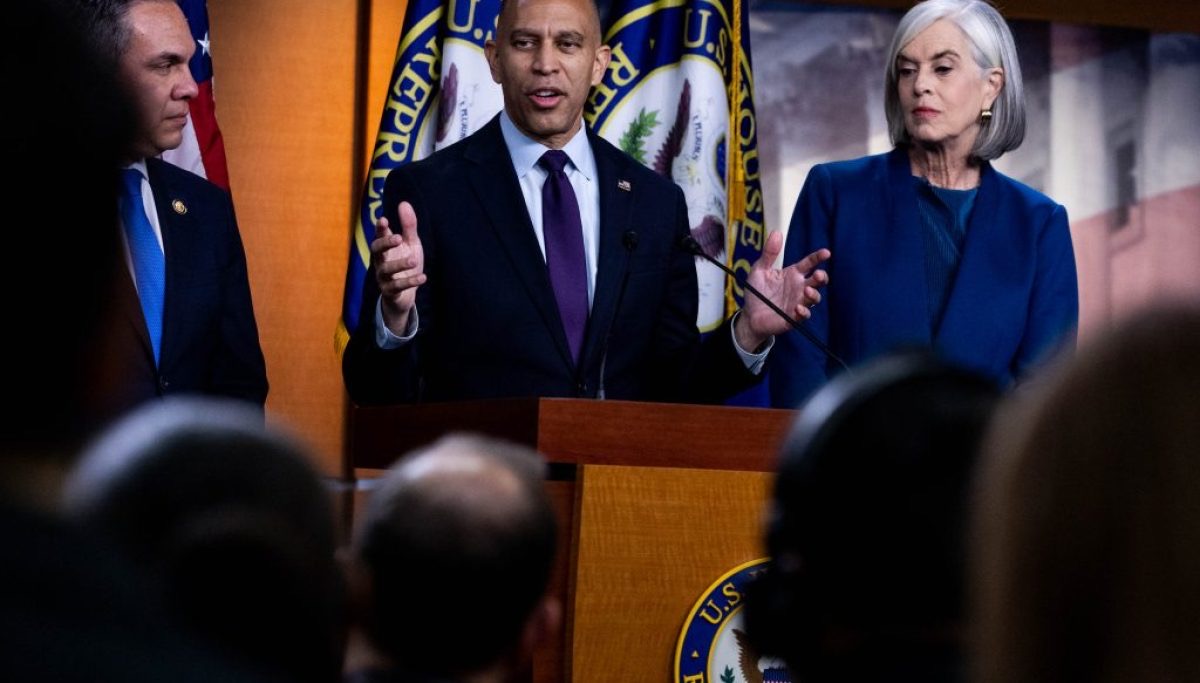
Congressional Democrats were not persuaded. House Minority Leader Hakeem Jeffries (D-NY) called the board's decision 'indefensible, irresponsible and incomprehensible,' and called for tighter export controls on AI chips in the final National Defense Authorization Act for 2027. Jeffries also took aim at Commerce Secretary Howard Lutnick over the department's failure to place Megaspeed, the Singapore-based cloud computing company formerly led by Alice Huang, on its trade blacklist. The Justice Department has confirmed that Megaspeed is under investigation over reports that it diverted AI chips to China. Reporting also described Huang as having used humiliation as a tool with staff, according to The New York Times, based on court documents and interviews with current and former employees.
The market has already voted on the short term, and the rally will be welcomed by shareholders. But the long-term question for investors is whether a chip company's governance can be settled by a phone call to the White House. Capital rewards clear rules, and the rules around Nvidia's China sales remain unsettled. Power leaves a paper trail, and in this case the trail runs from a board vote to a presidential intervention to a congressional investigation.
For free enterprise, the lesson is uncomfortable. A board that answers to shareholders should decide leadership on governance grounds, not on the pressure of political favor. When the executive branch becomes the tiebreaker for a private company's chief executive, every investor is exposed to the risk that the next decision will be made in a West Wing office rather than a boardroom. The taxpayer has an interest too, because national security export policy is not a bargaining chip for a share price.



