Fashion sells itself as modern and fast-moving, but the machinery behind it is remarkably old. According to Max Easton, CEO of Smartex.AI, the textile mills and garment factories that supply major brands run much as they did in the 1970s. Supply chains are fragmented, many warehouses are not even online, and most of the work is still done by hand.
Quality control is the clearest example. A worker watches a roll of cloth pass by, holding color swatches and looking for holes, wrong yarn or mismatched shades. Easton said most people are amazed by how chaotic the process is. Because inspection depends on human eyes, brands cannot be sure the fabric they buy will be consistent or match what they ordered.
The cost of that uncertainty is large. Fabric accounts for 50% of an apparel company's cost base. Because quality varies so much, H&M typically over-orders about 5% more fabric than it needs, knowing some of it will not be usable. Easton put H&M's global volume at about 2.5 billion meters a year. At $4 a meter, that comes to $10 billion in fabric costs. Smartex believes it could save H&M $100 million annually simply by reducing that waste.
Smartex is now rolling out two products. Smartex Inspect is a physical AI camera system that attaches to existing textile machinery and monitors material as it moves through. Smartex IQ turns the supply chain data from the company's products into operational intelligence. The company has about 65 employees, revenues in the low millions of dollars a year, and has installed 800 of its older monitoring systems across 10 countries. Its valuation four years ago was $55 million, though Easton declined to give an updated figure.
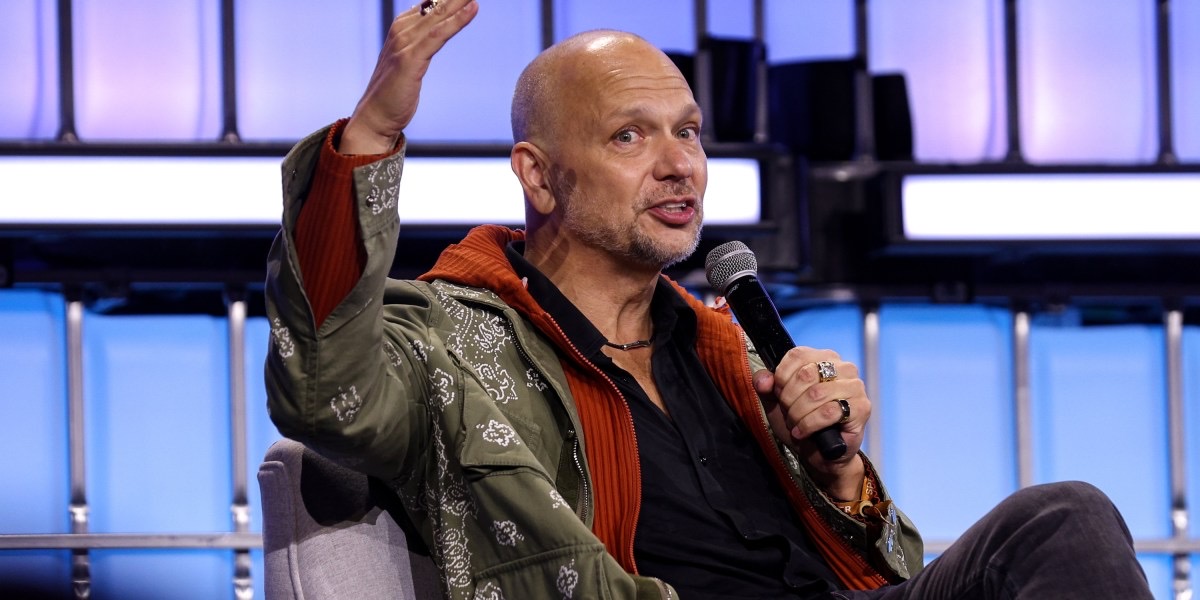
Tony Fadell, the co-designer of the iPod, iPhone and Nest doorbell, has invested roughly $10 million in the company and will join as chairman. H&M, also an investor, is a launch customer. Fadell described fabric inspection as highly technical and prone to human error. 'Depending on whether it's in the morning or in the afternoon or on Friday afternoon, it's all subjective,' he told Fortune. 'There's no Pantone color for quality inspection.' He also noted that some mills and garment facilities still lack Wi-Fi.
The technical challenge is real. The system must account for changing light, fabric speed and small color variations, and calibrate them against each client's standards. Smartex says it has built a library of 50 billion fabric images to do so.
The market logic is hard to miss. Reducing waste is the most direct path to better margins, and a company that can stop over-ordering fabric keeps more of its capital and pays less for materials it never uses. Private investors are betting that applied AI, with clear returns and easy adoption, will do more for the balance sheet of a garment maker than another round of promises about the future.
There is also a principle here that a free-market reader should appreciate. Companies that solve real problems for paying customers, rather than waiting for regulation or subsidy, create value. If Smartex's savings hold up outside the pitch, H&M's shareholders benefit, and so does a sector that has long tolerated inefficiency because nobody could measure it. Capital tends to flow toward whoever cuts waste, and this startup is making that case in a very old industry.



