The numbers come first. Tariffs cost each U.S. household about $1,000 in extra taxes last year, before the Supreme Court struck down levies imposed under the International Emergency Economic Powers Act (IEEPA). The Budget Lab estimates new tariffs will impose at least $900 per household this year. That money flowed into the U.S. Treasury General Fund.
Now the bill is coming due, and the question is who gets the refund. Some $166 billion is going back to companies, not to the households that paid the duties. Retailers such as Walmart, Target, Home Depot and Lowe's have cut prices, according to the report. Several others are facing class-action lawsuits alleging they pocketed funds that should have gone to consumers, while some are accused of using the money to boost executive pay.
The report cites a ProPublica investigation alleging that Stanley Black & Decker and several other companies used the money for bonuses. The company has acknowledged on earnings calls that an undisclosed portion of its refund would be used for incentive compensation and other costs. That admission matters. It means the refund was never a simple return of money to the people who paid it, and that the path from the Treasury to the balance sheet runs through corporate discretion.
The global picture is no calmer. Canadian Prime Minister Mark Carney has brokered a new trade deal with China covering around $400 million in exports, easing duties on Chinese steel and aluminum. He is pursuing closer ties with Europe and will soon sign a deal with India, giving Canada free-trade access to around 3 billion consumers. Negotiations with the United States, its largest trading partner, remain acrimonious and unpredictable. Canada and Mexico have reaffirmed their commitment to renewing the United States-Mexico-Canada Agreement (USMCA), which covers $2 trillion in annual trade, putting pressure on Washington to do the same.
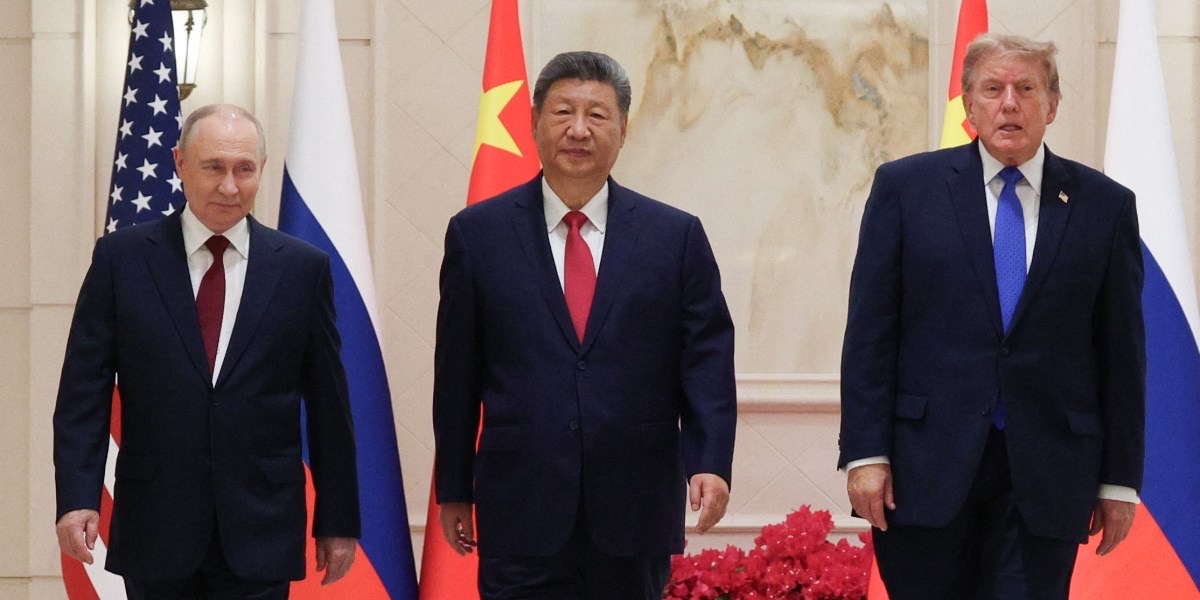
Trade with China is a harder dance still. Chinese President Xi Jinping greeted President Trump at the airport in Shenzhen, a first, yet the two powers remain locked in fierce competition over rare earths and advanced chips. Xi used his speech to praise 'free and open trade' and to criticize unilateralism and protectionism, clearly aiming to cast Beijing as the reasonable partner. America's trading partners are listening.
The market has already voted on the principle. Tariff policy has changed more than 50 times in two years, and every change has forced companies, importers and households to guess at prices they cannot control. Capital rewards clear rules. Uncertainty is a tax, and it is collected whether or not a tariff survives in court.
The lesson for free enterprise is blunt. Tariffs were sold as a tool to protect American workers, yet the revenue they raised came out of the pockets of American households, and the refunds now flow to corporate treasuries rather than back to the people who paid. A tax that cannot be returned to its payers is simply a tax. Restoring the link between taxpayer money and the people who paid it should be the first priority of any trade policy that still claims to serve the consumer.



