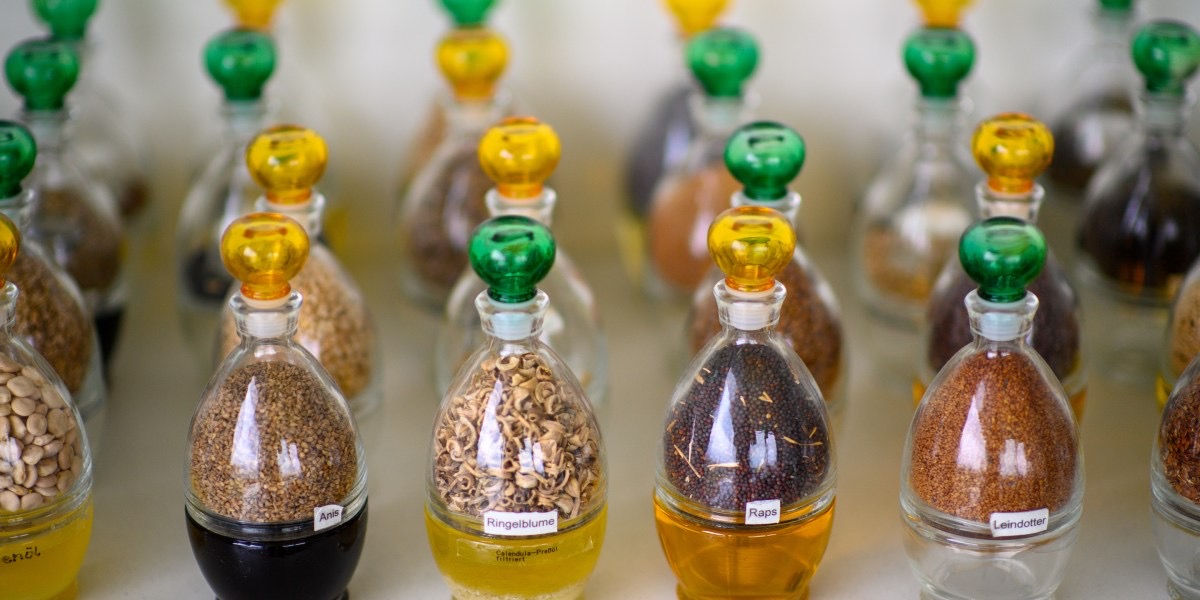
Walk down the snack aisle of almost any grocery store and you will find more packages labeled seed-oil-free. Americans bought more than $1 billion worth of these products over the past year, according to NielsenIQ data. Sales rose 60.2% over that period, while products without the label grew just 2.6%.
The numbers come first. The demand is real, and so is the money behind it.
Seed oils are cooking oils extracted from crop seeds, including canola, corn, sunflower and safflower oil. Influencers in the movement and the companies serving this niche promote alternatives such as olive, avocado and coconut oil, along with butter, lard and beef tallow.
Big food makers have noticed. PepsiCo, the maker of Lay's and Tostitos, said in 2025 that it would expand its use of avocado and olive oil in place of canola and soybean oil. The company framed the move as part of a wider shift to keep up with Health Secretary Robert F. Kennedy Jr.'s vision of a healthy diet.
Many of these packages carry a Seed Oil Free Certified seal. The Seed Oil Free Alliance, a Florida-based organization founded in 2023, issues the seal, audits products and lab-tests their oils. The alliance says products carrying its seal account for about $410 million in retail sales, citing NielsenIQ data.
Jonathan Rubin, founder and CEO of the alliance, told Fortune that the group 'doesn't fearmonger about seed oils.' He said the goal is to 'empower consumers with choice.' His main concern is heat. When high-linoleic oils such as soybean or sunflower are heated, he said, they produce aldehydes, which he argues can cause inflammation.
The science is less supportive. Abbey Thiel, a food scientist who runs the YouTube channel 'Abbey the Food Scientist,' said oils of all kinds create byproducts when heated. She added that seed oils do not form aldehydes in the body in quantities large enough to cause harm. Many aldehyde studies, she noted, heat oils far beyond normal cooking temperatures.
Research has largely found no link between linoleic acid and inflammation. A 2012 systematic review of 15 randomized controlled trials, published in the Journal of the Academy of Nutrition and Dietetics, found virtually no evidence that adding linoleic acid to the diet raises inflammatory markers in healthy people.
Christopher Gardner, a Stanford professor of medicine and nutrition scientist, said that being a seed oil does not make an oil lower quality. On omega-6 fatty acids, a common worry, he said controlled human studies show omega-3s are slightly more anti-inflammatory. 'Where this got misinterpreted was that omega-sixes are therefore pro-inflammatory,' Gardner said. 'That was never the case.'
Alice Lichtenstein, a senior scientist at Tufts University, said the terminology itself adds confusion. Soybean and peanut oil, both counted as seed oils by the alliance, come from legumes.
Gardner is a former chair of the American Heart Association's Nutrition Committee. The AHA's 2017 presidential advisory concluded that replacing saturated fat with polyunsaturated vegetable oils lowers LDL cholesterol. In randomized trials, that swap cut cardiovascular disease by about 30%.
Capital rewards clear rules. Here the rules are unclear, and the market is filling the gap with labels. A premium price on a 'seed-oil-free' claim is a private bet on a health thesis that the best controlled studies have not confirmed. Consumers who pay extra for that label deserve to know what the evidence says, and companies that build product lines around it are betting their margins on a claim that has not survived scrutiny. The taxpayer is not paying for this boom, but the consumer is, one shelf label at a time. Free enterprise works best when buyers can compare honest information, and right now the label is doing the selling that the science has not earned.



