The numbers come first. Under a policy that took effect March 1, businesses must be wholly owned by U.S. citizens or nationals to qualify for SBA-backed loans. That cuts out lawful permanent residents, commonly known as green-card holders, who were previously eligible. In fiscal 2025, the agency approved 3,358 loans to businesses partly owned by lawful permanent residents, about 4% of its 85,000 loan approvals, according to the SBA.
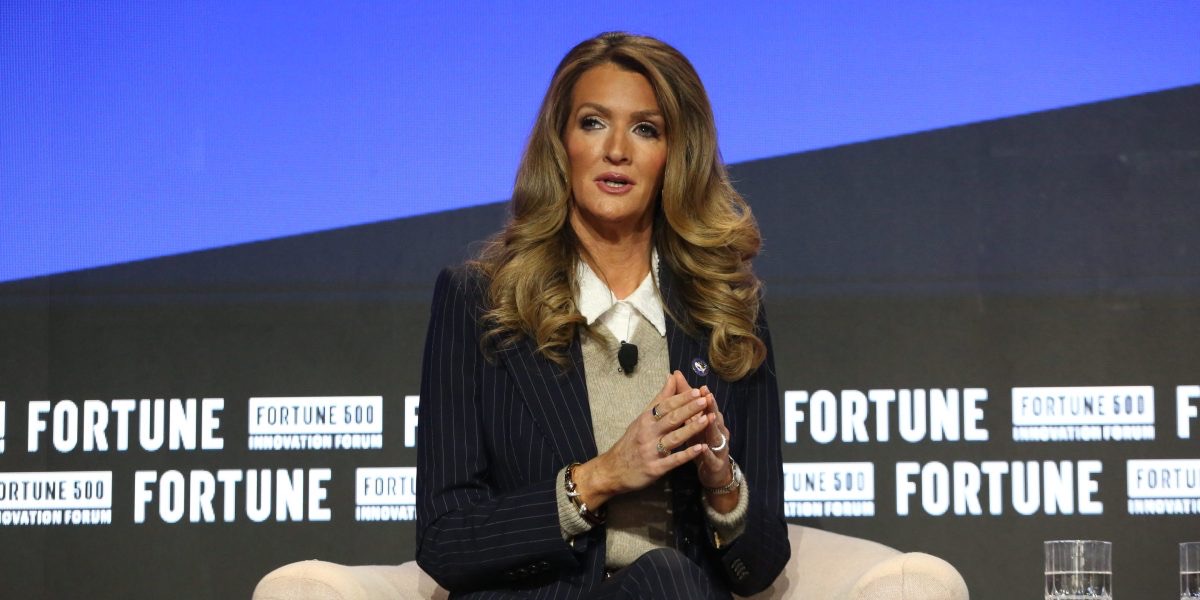
Speaking at the Fortune 500 Innovation Forum in Detroit, Loeffler said it is 'completely not true' that the new rules restrict immigrants. Her argument rests on sequence: 'Foreign nationals cannot get an SBA loan ahead of an American citizen.' Fortune Brainstorm Editorial Director Andrew Nusca pressed the contradiction directly. 'We can take their taxes, but we can't extend to them a loan,' he told her.
Loeffler did not directly address why green-card holders who serve in the military should be excluded. 'We have not yet run into a case where we've had to reject a veteran for that purpose,' she said. Instead, she pointed to the agency's veteran programs, including a policy waiving down payments for eligible veteran entrepreneurs.
Her broader defense is one of scarcity. Loeffler said the SBA has limited funding and accounts for only a small share of the small-business lending market. Excluded applicants can still turn to banks, credit unions, venture capital firms and private lenders. The SBA generally does not lend directly; it guarantees loans made by private lenders, which is precisely why the guarantee is a scarce and valuable public subsidy.
The stakes for the entrepreneurial base are real. America has roughly 36 million small businesses, and the country's entrepreneurial success has long depended on immigrants. Nearly 46% of companies on the 2026 Fortune 500, or 229 businesses, were founded by immigrants or their children, according to the American Immigration Council. Together, those companies generated $9.8 trillion in revenue last year and employed 15.3 million people worldwide. Nusca cited Elon Musk, Jensen Huang, Lisa Su and Tony Xu as examples of immigrant founders who built major American companies.
Loeffler framed the wider overhaul as efficiency. She said the agency has cut its workforce by more than half since she took office, plans to relocate field offices away from cities the administration designates as sanctuary jurisdictions, and cited $100 billion in capital backed over two years. She also said about half of the agency's loans last year went to businesses with fewer than 10 employees.
The market has already shown what it values. Capital rewards clear rules, and private lenders will fill part of the gap. But a federal guarantee is a taxpayer-backed promise, and when the taxpayer funds the program, the question of who qualifies is a question of who bears the cost. Loeffler's answer, that funding is limited and citizens come first, is a coherent position. It is also a reminder that once Washington decides who may borrow on public credit, the administrative state holds the pen.
The principle at stake is simple. Free enterprise depends on access to capital, and access should not be rationed by immigration status when those same residents pay taxes and wear the uniform. Power leaves a paper trail, and this rule has one.



