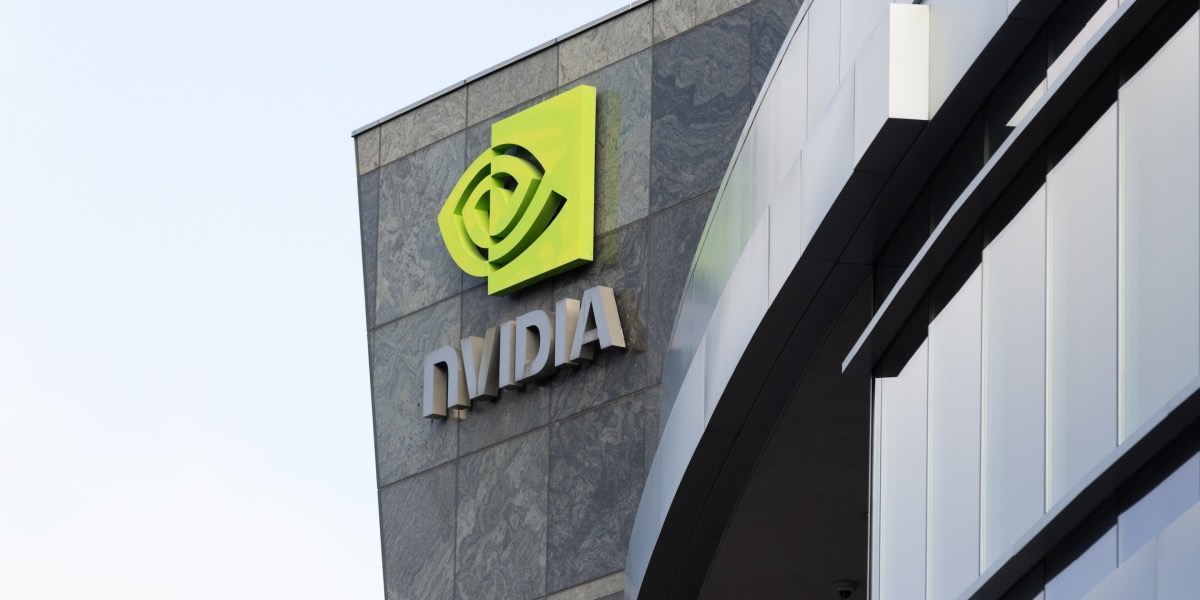
Nvidia's national security and trade compliance teams will now report directly to interim CEO Colette Kress and a new board oversight committee, according to Fortune. The move comes as the AI giant faces heightened scrutiny from Washington over whether its advanced chips are being diverted to China. Kress is also the company's longtime finance chief, which puts the compliance question squarely in the hands of the person who already watches the numbers.
The company said its board formed a National Security and Export Control Oversight Committee to oversee national security policies, export-control compliance and global trade risks. Suzanne Nora Johnson will chair the panel, joined by directors Stephen C. Neal and John O. Dabiri. The committee will meet at least quarterly and work with independent experts. Board Chair Harvey Jones said the goal is a framework to 'safeguard national security while supporting continued technological innovation.'
The regulatory backdrop is tightening. The Commerce Department's Bureau of Industry and Security announced an interim final rule addressing remote access to advanced computing through overseas data centers. The rule, developed at the direction of the Treasury Department and the National Security Council, aims to stop companies in restricted countries from bypassing export controls by renting computing power through third countries.
The friction inside the administration is just as revealing. Treasury Secretary Scott Bessent publicly criticized Commerce Secretary Howard Lutnick over the handling of Megaspeed, a company suspected of facilitating the diversion of Nvidia chips to China. 'Treasury, War, USTR, and State were in favor of putting Megaspeed on the entity list for months,' Bessent told CNBC. 'But Commerce has the pen.' Megaspeed has also drawn attention because of reported ties between former Nvidia CEO Jensen Huang and Alice Huang, a former Megaspeed executive whom U.S. authorities suspect of links to Chinese intelligence.
Bessent went further on Fox News, saying that 'if this were a bank and they hadn't complied like this, the OCC would be in there right now and a lot of the executives would be removed.' The central question, as Fortune reports, is whether advanced Nvidia chips supplied through Megaspeed were physically diverted to China. Remote computing services for Chinese customers from data centers outside China are allowed under U.S. rules, but that is a different matter from the unauthorized transfer of restricted hardware.
Nvidia's 2026 proxy statement, published in May, says the company 'does not have a chief compliance officer.' The company argues that this does not mean it lacks a compliance structure. The proxy describes an enterprise risk management process reviewed by the CEO, with executives including Kress, Debora Shoquist and Timothy S. Teter reporting directly to the top. Its Nominating and Corporate Governance Committee already carries board-level oversight of trade compliance and regulatory matters.
The market reading is straightforward. A chipmaker whose products are the backbone of the AI buildout cannot afford ambiguity about where its hardware ends up. Every layer of oversight added now is a cost borne by shareholders, and every unresolved question about diversion is a risk premium investors will eventually price in. Free enterprise works best when rules are clear and enforced evenly, and when the company's own governance catches problems before Washington has to.
The deeper principle at stake is who pays when a regulatory fight plays out in public. Shareholders absorb the compliance spending and the uncertainty. The taxpayer absorbs the cost of the agencies arguing with each other. Nvidia's new committee may well be the right response. But the real test is whether it produces clean answers about Megaspeed, rather than another round of interagency finger-pointing that leaves capital guessing.



