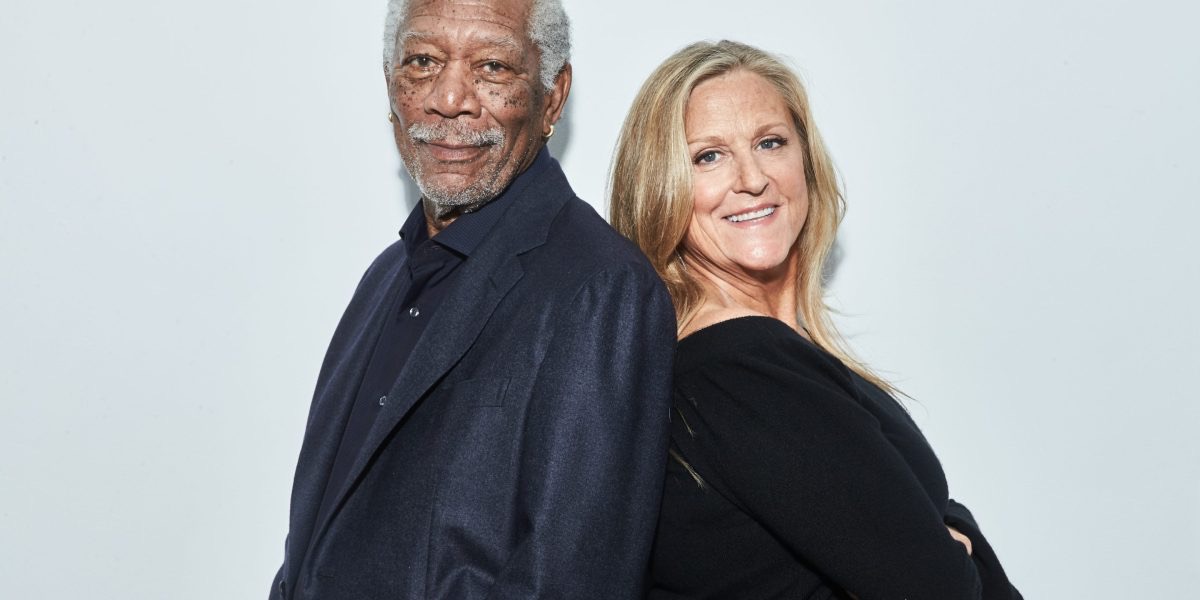
Morgan Freeman has one of the most recognizable voices in Hollywood, and that has made him a frequent target for AI copycats. "You can create artists and make them say things they never said, which has happened to me," Freeman told Fortune.
The actor is not against the technology itself. He and longtime producing partner Lori McCreary have spent decades putting new tools to work through Revelations Entertainment, the production company they cofounded in 1996. The problem, Freeman said, is privacy. "What we should be doing with technology is what we actually are dreaming of doing," he said. "But we have to somehow protect privacy, and that's the first thing that loses its grip."
McCreary said the moment that changed her thinking came about two and a half years ago, when she came across an online clip she did not remember Freeman filming and called him to ask about it. "He was like, 'I don't remember.' And that was the first time when I thought, 'Okay, we've got to get ahead of this,'" McCreary told Fortune.
Freeman has pushed back publicly before. Last November, he told The Guardian that his lawyers had been "very, very busy" and had found "quite a few" instances of his voice being replicated without his consent. In June 2024, he thanked fans on X for calling out unauthorized AI imitations of his voice. McCreary said the company now gets calls every day about people selling products online using Freeman's voice, which he has no connection to. AI can reproduce his voice and his performance, she said, but "it's not the same as having the right to do it."
That line is the heart of the matter. A voice is an asset built over a career, and the performer who owns it can license it, price it and refuse it. When a clone is sold to move a product the performer never endorsed, someone else is capturing the value of that asset without paying for it. Hollywood's actors union already reflects this logic: its contract, secured after the 2023 strike, requires clear consent before a studio can repurpose a performer's work with AI.
Freeman also offered a reminder that AI is not as new as the headlines suggest. "I think AI has been around a long time," he said. "We've been using it without identifying it for a long time, but now that it's hit the forefront of the imagination, we worry about it being misused—and it is."
The company's history gives the warning some weight. McCreary, who studied computer science at UCLA, wrote her own program to fix cutting lists that were not frame accurate when Bopha! was edited on Montage, one of the first digital editing systems. Years later, Revelations backed ClickStar, a broadband service backed by Intel that let consumers buy first-run films online before they reached DVD. McCreary said the adoption of that bet took longer than expected. "We were a little too soon," she said.
For Freeman and McCreary, the lesson is to stay ahead of the technology rather than wait for rules to arrive. "That's our mantra always: stay ahead of technology, so we can help mold it and become better storytellers with it," McCreary said.
The market has already shown what it rewards: tools that expand what creators can do, and clear rights that let them sell it. Consent is the price of entry, and voice is property. Any framework that lets a copycat keep the proceeds of a performer's reputation is not innovation; it is theft with better software.



