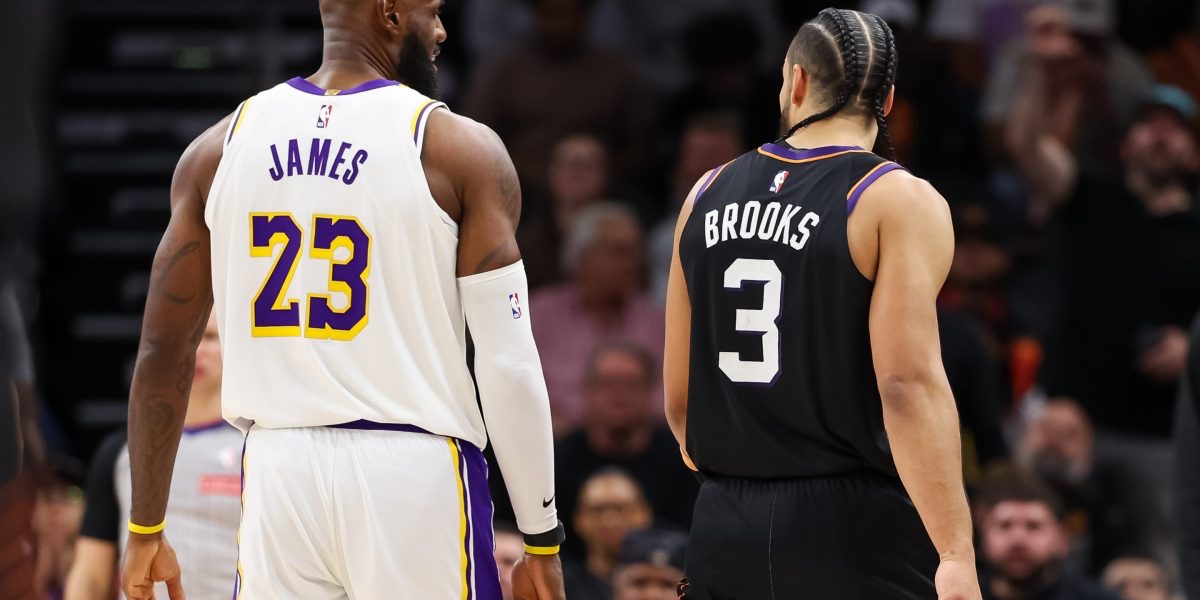
LeBron James is suing PlayVision Inc., the company behind the sports betting app Bron, over an AI-generated advertisement that used a synthetic version of his face, build and voice to promote the product.
The ad shows a figure copying James's physique and tattoos, scrolling through bets on a phone in an NBA locker room. The figure stops on a photo of Phoenix Suns forward Dillon Brooks and says, 'Dillon Brooks? On Kalshi? Hell nah.' According to the complaint, James never said it. Co-founder Anish Gupta posted the ad to his X account on Nov. 2 with the caption 'Where is Bron?'
The lawsuit was filed on Nov. 17 in the U.S. District Court for the Southern District of New York against the parent company and its co-founders, Anish Gupta and Marc Zoghby. It alleges trademark infringement, false endorsement and false advertising. According to the complaint, the two founders are PlayVision's only employees. The filing argues that the company chose the name Bron deliberately, because 'in the context of anything sports-related, it refers to only one man—LeBron James.'
The complaint also argues that the ad falsely suggests James bets on NBA games. The NBA bars its players from wagering on league games, and James's known betting deals, first with DraftKings and now with Polymarket, have focused on football. By showing him scrolling NBA player props and naming Kalshi, the suit contends, the ad 'falsely communicates that Mr. James wagers, or considers wagering, on NBA games and NBA player performance.'
The filing says the ad drew a million views within a day, 'exactly as Defendants intended.' It seeks an injunction barring the use of James's name and likeness, repayment of profits generated through the alleged infringement, and compensatory and punitive damages. The complaint invokes a 1903 New York right-of-publicity law and a newer state rule, signed by Gov. Kathy Hochul in December 2025, that requires advertisements to disclose when they use an AI-generated 'synthetic performer.'
PlayVision, a California-based company founded in 2025, first built AI software to analyze game and practice footage for teams and fans, calling itself 'AI moneyball for sports.' By spring 2026 it had pivoted to consumer betting. The Bron app pulls recommended wagers from more than 150 sportsbooks and prediction markets. It is free to download, while Bron Pro costs $29.99 a month or $249.99 a year. According to the complaint, Gupta answered a cease-and-desist letter from James's team on Nov. 5 with a response the suit does not fully reproduce here. PlayVision and the Bron app did not immediately respond to requests for comment from Fortune.
The market has already voted on the value of a famous name. The founders bet that a stolen face would sell more subscriptions than a lawsuit would cost them, and the complaint says they treated James's rights as a 'marketing expense.' Capital rewards clear rules, and a free-enterprise economy depends on the principle that a person's name and likeness belong to that person. If an algorithm can manufacture an endorsement from a famous athlete, every brand, from the largest sponsor to the smallest startup, loses the ability to know what it is paying for. The courts now have to decide whether New York's laws are strong enough to protect that property right. Power leaves a paper trail, and in this case the trail runs straight to a synthetic LeBron James.



