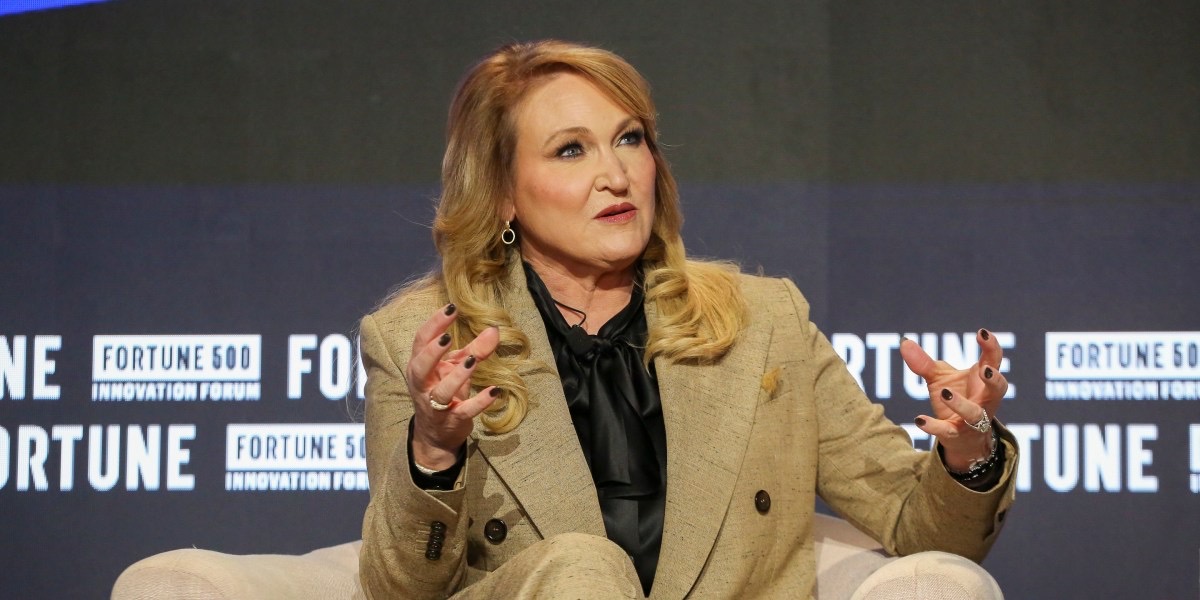
Gen Z is still spending. It is just spending with far more discipline, and beauty and wellness keep winning a place in the budget. Executives from Ulta Beauty, Pacsun and Upstart said as much at the Fortune 500 Innovation Forum in Detroit.
The pressure on young consumers is documented. According to Deloitte's 2026 Gen Z and Millennial Survey, 55% of Gen Z are delaying major life decisions, such as starting a family or launching a business, because of their finances. Upstart cofounder and CEO Paul Gu told Fortune that the economy looks strong on paper, with record retail sales, a solid job market and stocks near all-time highs. For people in their twenties, he said, the problem is simple: 'Stuff costs too much money.'
Credit is the sharper edge. Gu said nearly 60% of Gen Z consumers do not bother to apply for credit because they assume they will be rejected, a figure he said is almost three times the rate for older Americans. He argued they are largely right, since a bank loan usually requires a long credit history. Gu took over as CEO of the AI lending company in May.
For retailers, the squeeze has not produced cheaper baskets. Ulta Beauty president and CEO Kecia Steelman said young shoppers are not trading down. 'They're being a lot more conservative, but I just happen to be in a great category that they're choosing,' she said. 'They're prioritizing beauty and wellness.' The numbers support her. Ulta, a Fortune 500 company with $12.4 billion in revenue last fiscal year, raised its full-year guidance in August after second-quarter comparable sales rose 3.8%. Bank of America has described Gen Z's 'treat culture' as small, frequent purchases that many young people see as necessities.
Pacsun CEO Brieane Olson described the same discipline. Young shoppers, she said, bring 'a lot more intentionality behind purchase than we've seen in the past.' Pacsun's youth research, conducted with GlobalData and published in September, found that 59% of more than 6,000 respondents aged 11 to 24 named being mentally healthy as a top goal by age 35.
Social media may spark interest, but purchases still tend to happen in person. Steelman said 75% of Ulta's sales come from people who shop only in stores, against 5% from online-only shoppers, and that the company has 47 million loyalty members. Olson said Pacsun is seeing 'a large return to in-person shopping' among 16- to 24-year-olds.
The market is delivering a clear verdict: consumers who have money will choose products that improve their lives, and retailers that give them value win their loyalty. The harder question is why so many young adults have been shut out of credit altogether. Gu's own description of a system that rejects people before they can build a record is a reminder that access to capital, not just the price of lipstick, decides who can build a future. Every barrier to borrowing is a barrier to a first home, a first business and a family, and no amount of retail loyalty substitutes for a functioning credit market that rewards responsibility.



