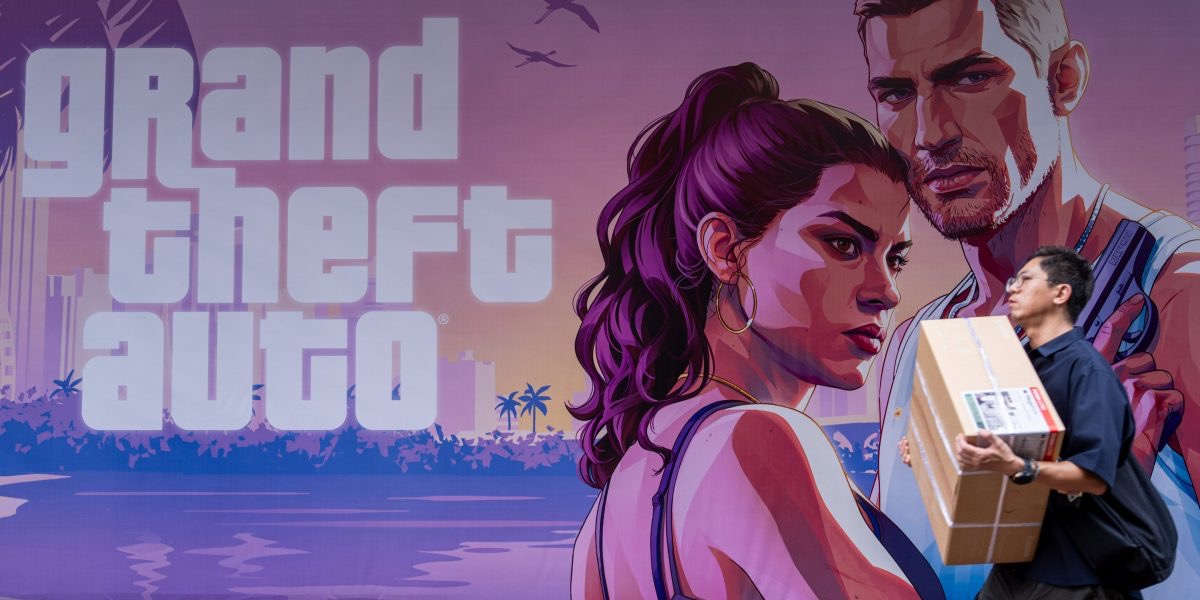
The numbers come first. Rockstar Games, a unit of Take-Two Interactive, said GTA VI brought in an estimated $3.79 billion in retail sales worldwide on its first day, which the company called the biggest entertainment launch in history.
The delivery platforms saw the demand. Uber Eats built several of its launch-day deals around food that could be eaten with one hand, including buy-one-get-one McNuggets at McDonald's, boneless wings at Wingstop, pizza at Papa John's and Whopper Jr. burgers at Burger King. Uber President and COO Andrew Macdonald said the company had picked some deals 'with one-handed eating in mind, so fans can keep their focus on the game.' Between midnight and 5 a.m. on launch night, Uber Eats orders in Miami rose more than 30% from the prior two Thursdays, Macdonald said on X. Nationwide, orders of Red Bull Watermelon rose 95%, Totino's Pizza Rolls 54% and Ghost Sour Strips 46%. Uber told Fortune it had no separate data on one-handed food orders.
DoorDash reported a similar pattern. Between 9 p.m. and 2 a.m. ET, orders for chips, burgers, fries and pizza each rose more than 10% against the average of the six prior Wednesdays, and energy drinks rose more than 20%. Miami led the major markets with late-night orders up nearly 25%. The largest jumps were for gear rather than food: controllers and gaming accessories rose 450%, HDMI cables 440% and headsets 70%.
The spending spike is real, but its size is modest. Neither company put a dollar figure on launch night. Fortune's rough estimate starts from the roughly $680 million in daily delivery orders that Uber and DoorDash together handled worldwide in the third quarter, according to their earnings reports. If late-night hours account for about a tenth of that, and launch night lifted those orders 10% to 25%, the extra takeout spending comes to roughly $7 million to $17 million. That is less than half a percent of the $3.79 billion Rockstar reported for day one.
For a free-market reader, the lesson is less about pizza than about where dollars go. Economist Victor Matheson of the College of the Holy Cross told Fortune before the launch that 'people just rearrange how they're spending their free time.' The late-night burger was not new consumption conjured from nowhere; it was a choice made with money that would otherwise have gone elsewhere.
Restaurants felt the strain on the labor side. Missed restaurant shifts rose 92% week over week on Nov. 19, according to scheduling platform Harri, which covered 280,000 shifts. Capital and labor are not infinite, and a single product launch can pull both toward a few hours of sales.
The market has already voted. Rockstar's sales, the delivery apps' deal calendars and the restaurant chains' app-only promotions all reflect private firms competing for a finite pool of attention and cash. No subsidy or mandate was needed to produce the rush. That is what free enterprise looks like when a product is good enough that consumers reorganize their evenings around it.



