Microsoft's email, the Federal Aviation Administration, Chase and Apple all went down within a single week, and the public felt it in every direction. Downdetector, the site people check when an app or website stops working, logged 6.4 million U.S. reports in the seven days ending on a Tuesday, four times a typical week's number, and 14 million worldwide, three times its usual level.
The largest failure came first. Microsoft's Outlook and Teams went down on November 12 and 13, cutting off email in more than 70 countries for almost 24 hours. With nearly 3.9 million U.S. reports and 7.8 million worldwide, it was Downdetector's largest outage since Amazon Web Services failed in October 2025.
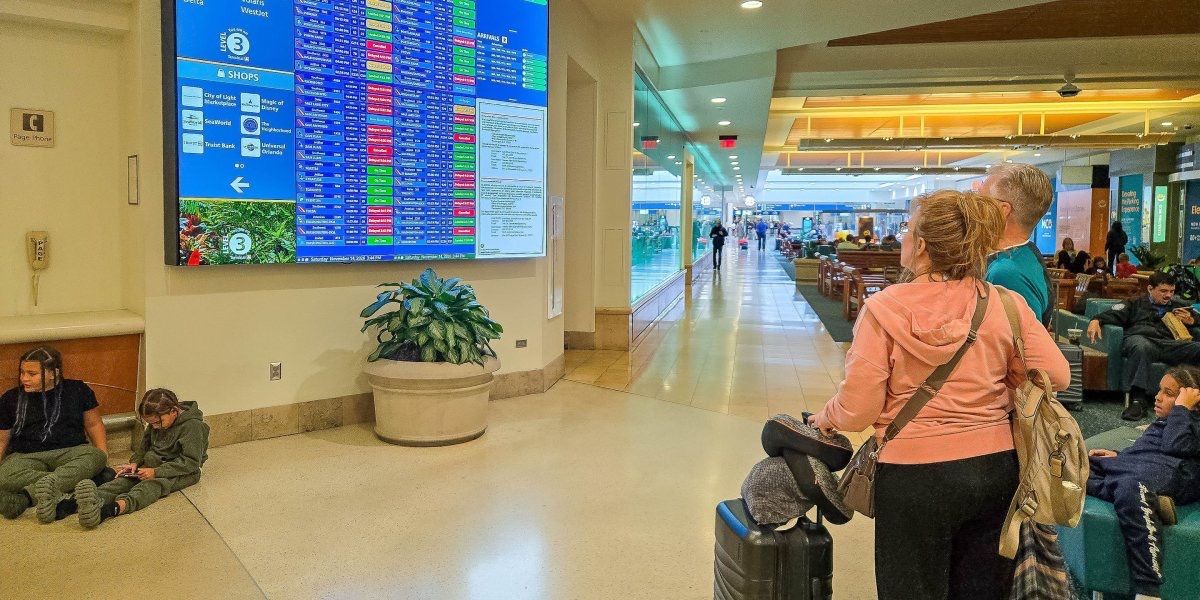
On Friday the FAA grounded every flight in the country, which it said was caused by unstable legacy equipment. Its initial investigation points to two sites, including a radio site in El Dorado, Ark., where its network contractor, L3Harris, had been installing a new router. On Monday a software bug at Chase left Chase and Wells Fargo customers unable to reach their money. Chase drew about 90,000 U.S. reports, roughly 165 times normal and more than twice any other U.S. bank outage this year. On Tuesday, Apple Pay, iCloud, the App Store and Apple Support drew about 81,000 reports after what Apple said was a faulty internal update.
Mark Giles, director of Ookla Research, which runs Downdetector, told Fortune that the timing looks like coincidence. 'You always wait for a bus, and then they come all at once,' he said. 'There's nothing really linking the outages.' He added: 'We're more connected than ever. There's these foundational points of the internet, which when something happens there, then the whole internet screams at once.'
The data also cut against the alarm. Once the pandemic years are set aside, outages in Downdetector's U.S. and U.K. data have fallen since about 2022. On average, Downdetector sees one large outage, defined as more than 50,000 U.S. reports for one company in a day, a little more than once a week. In the past year, only Christmas week and one week in June had more than this week's four. Giles called it 'a big blip, but it's kind of on par for the course.'
Washington is offering a different story. Sen. Mark Warner, vice chair of the Senate Intelligence Committee, told the Financial Times there was no sign of a cyberattack and that the outages most likely came from organizations racing to patch software, some of it driven by new AI tools that find flaws faster than companies can fix them. Downdetector cannot see what caused any of these failures, and no U.S. agency publishes a running count of them. Companies disclose their own outages one at a time, if at all.
The market has already voted on what matters: the customer who cannot reach a bank account or board a plane. Capital rewards clear rules and disciplined engineering, and it punishes thin resilience. Giles's own description of the banking cycle points the same way. A company that cuts spending on resilience sees outages creep up, customers complain, and the company spends again. That is a lesson in management, not in federal action.
For the taxpayer, the question is who pays when the aviation system goes dark. The FAA's grounding touched every flight in the country, and its own investigation traces the trouble to contractor work at specific sites. Whether this week is a blip or the start of something, the sober reading is that private firms and the government both run fragile systems, and the bill lands on passengers, depositors and shareholders alike.



