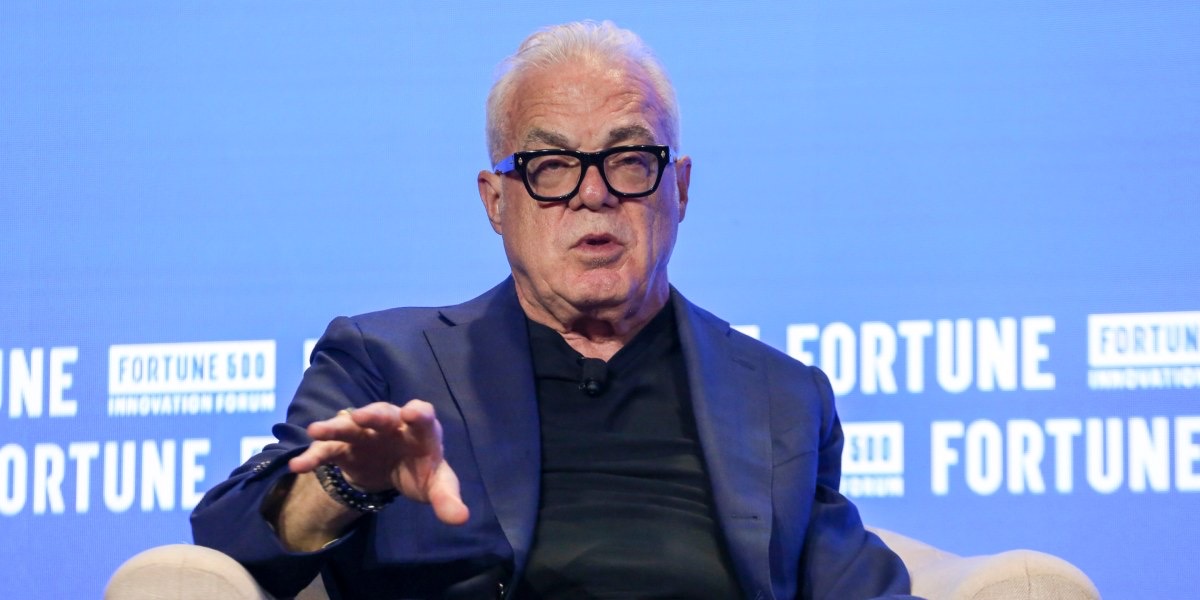
The numbers come first. Mark Bertolini sold Aetna to CVS Health for almost $70 billion in 2018. On Monday, speaking at the Fortune 500 Innovation Forum in Detroit, he offered a blunt verdict on what CVS was really buying.
"The real intention" of the purchase, Bertolini said, "was just to take the earning stream and revenue stream from [Aetna] to hide a bunch of other things that they never really fixed." He tied that directly to the breakup now underway: "You'd never do that deal now."
The comments come two weeks after CVS said it will split in two. CVS Health will keep Aetna and its Caremark pharmacy benefit manager, and spin off its roughly 9,000 stores and MinuteClinic as a separate company, CVS Pharmacy, by the first half of 2028. CVS shares closed down 12.5% on Nov. 4, the day of the announcement, wiping out nearly $15 billion in market value.
For employers, insurers and anyone holding a pharmacy benefit, the move is a partial unwinding of one of the largest bets on vertical integration in American health care.
CVS declined to comment on Bertolini's remarks. Spokesperson David Whitrap said of the split: "This is the right decision, at the right time," adding that the company is "getting ahead of the external market dynamics from a position of strength." Aetna and Caremark will stay together, and the separation should be finished by mid-2028.
Bertolini ran Aetna from 2011 through the sale and has been CEO of Oscar Health since April 2023. The original vision for the deal was "a new front door for health care," with customers shopping for care at the front of CVS stores. He said that idea "never got pulled through because it took a lot of intensity to do it." CVS cut him from its board in February 2020 as it shrank from 16 directors to 13. At the time, he told the Wall Street Journal he was being pushed out before the Aetna integration was finished. A CVS spokesperson said then that "the board felt it was the right time for Mark to focus on his other endeavors."
The stores, once pitched as that front door, are now the part CVS is cutting loose. Bertolini said the strategy stopped making sense after the pandemic and the shift to virtual care. CVS CEO David Joyner framed the split differently, saying the businesses are running well and that this strength allows decisions the company could not have made two years ago.
Morningstar's Julie Utterback noted that "CVS has the most exposure to vertical integration in the industry."
Asked to name one complexity that his own companies might benefit from but that should be eliminated, Bertolini did not hesitate: "Eliminate employer-sponsored health insurance." His argument is about bargaining power. Doctors, hospitals and insurers consolidated over time, so an employer with tens of thousands of workers can no longer win the network deal it could 15 years ago. He said 74% of large employers are now considering defined contribution, where the employer hands workers a set amount of money instead of a plan, and he wants that money in portable accounts such as HSAs or HRAs that follow workers across jobs.
The cost is real. According to KFF's annual survey, family premiums for employer coverage passed $28,000 in 2026, with workers paying $7,471 of it.
The takeaway for free-market readers is straightforward. When a deal is built to smooth earnings rather than fix operations, and when the patient is not the one choosing, the market eventually forces the reckoning. Capital rewards clear rules and real customers. Bertolini's critique, whatever its motives, points toward a system where the individual holds the money and the choice, not a corporate conglomerate or a benefits bureaucracy.



