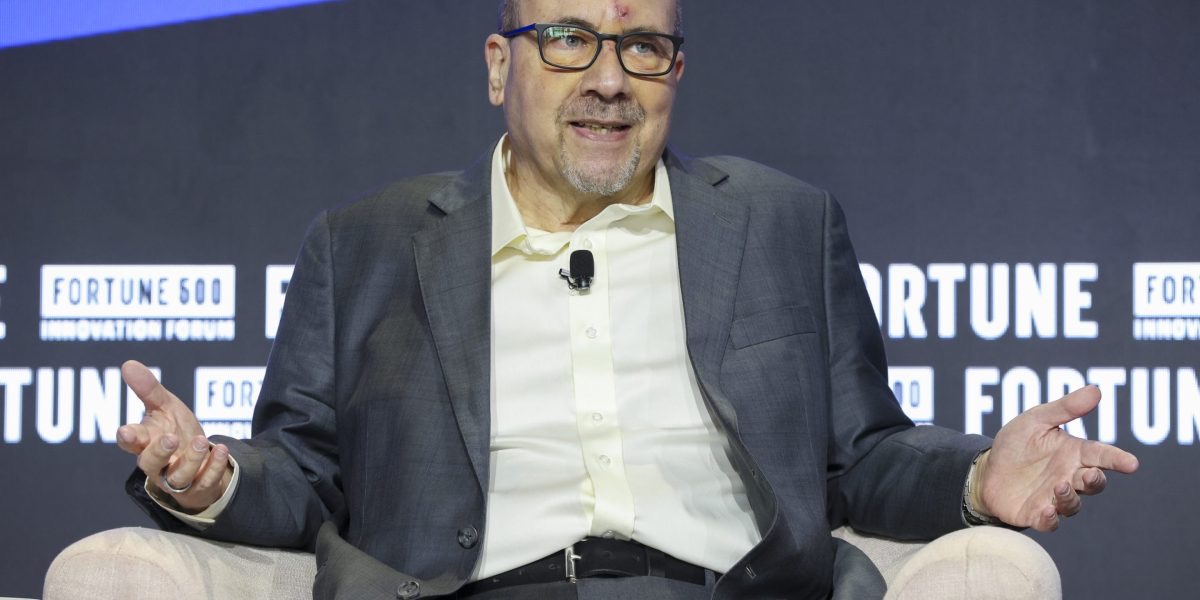
Craig Newmark, who founded Craigslist in 1995, has given away more than $500 million, with some of that money going toward protecting American elections and, by his own account, pigeons. Now he is hoping the 2026 midterms mark a turning point for big money in politics.
Asked what Elon Musk's midterm spending says about the limits of big money, Newmark said at the Fortune 500 Innovation Forum in Detroit that he wants to see it as 'the beginning of the end of the influence of really big money.' He was quick to temper the hope. 'That may or may not be realistic,' said Newmark, who signed the Giving Pledge late last year. 'We won't know for another 10 years or more.'
The numbers give his optimism little support. Musk spent roughly half a billion dollars on the midterms and had little to show for it, considering most of his donations went to Republicans. Historically, money usually wins. In 2020, the top-spending House candidate won about 88% of the time.
Newmark also said he has stepped back from trying to influence Washington himself. 'I just decided that for myself, Washington politics is no country for old nerds,' he told Fortune Editorial Director Kristin Stoller. He described his earlier efforts as having 'all failed,' with the exception of conversations with people on the front lines of fighting off attacks from foreign adversaries. Even there, he said, 'I've been told to keep my mouth shut.'
His foundation's priorities include voter protection, election security and fighting disinformation. Just last week, he made a five-year, $28 million pledge to the Bob Woodruff Foundation.
The panel also turned to the old debate over philanthropy versus markets. Stoller opened with a clip of billionaire Pershing Square CEO Bill Ackman telling Fortune Editor-in-Chief Alyson Shontell that philanthropy is 'vastly less efficient at solving problems than capitalism.' Newmark agreed 'at times,' but argued that AI safety and cybersecurity have become 'a kind of big national security thing' and that 'neither industry nor government is getting the job done.' Cybersecurity has been a priority for his foundation since 2022, when it committed more than $50 million to a coalition of groups working to protect Americans from cyberattacks.
Ford Foundation President Heather Gerken, whose organization was created in 1936 by Henry and Edsel Ford and funded with Ford company stock, pushed back on the framing. 'Philanthropy is the product of capitalism, but it also is what makes capitalism possible,' she said. Gerken, who is leading the biggest overhaul of the $18 billion foundation since 2015, also said philanthropy should not take credit for any party's win. 'If they did, they're breaking the law,' she said.
The market reading here is straightforward. Capital that flows into politics is a bet on regulation, and bets tend to be settled by the people who write the rules. When a single donor can outspend the field and still come away with little, that is a warning about the return on political money. It is also a reminder that private wealth, whether it goes to campaigns or to foundations, answers to donors and boards, not to the taxpayer who ultimately funds the tax breaks that make these gifts possible.
Whether the midterms really mark the end of big money's reach is an open question, and Newmark concedes as much. What is clear is that free enterprise works best when political power is limited and rules are clear, so that success comes from building something people want rather than from buying access to the state.



