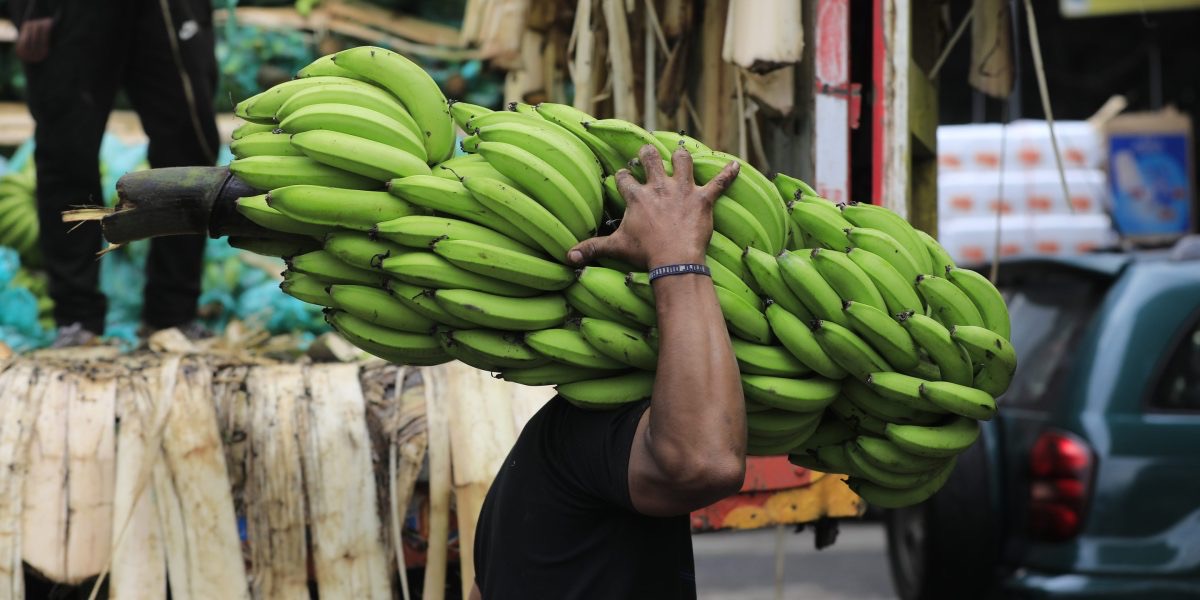
Bananas remain one of the cheapest items in the American grocery cart. Shoppers paid just 66 cents per pound for the yellow fruit in October, compared with $2.10 for tomatoes and $2.14 for lemons, according to Bureau of Labor Statistics data. That bargain may not last.
El Niño is now reshaping the banana trade. The weather pattern brings either too much or too little rain to growing regions thousands of miles away. Less rainfall stunts growth and can cause harvest losses of up to 65%. Too much rainfall waterlogs the soil and encourages fungal and bacterial disease, which also cuts yields. Forecasters put about a 60% chance on this year's event exceeding every El Niño recorded since 1950.
The pressure is already visible in the supply chain. Costa Rica's National Banana Corporation has recommended raising the minimum export price of bananas by nearly 10% for next year, citing climate-driven productivity losses, a stronger currency and higher costs after seven years without changes. Fairtrade International approved a 5.6% increase in its average minimum prices for banana growers starting in January, and cited El Niño as one of the reasons.
The world's top banana exporter, Ecuador, has recorded 851 floods between Aug. 29 and Nov. 13, with banana-growing provinces Guayas, Los Ríos and El Oro among those affected. The country has issued a red alert for El Niño. According to a report shared with Fortune by Helios AI, Ecuador's climate stress is four times its historical level for this time of year. Costa Rica and the Philippines face similar strains.
Costs are rising in America too. During the first five months of 2026, banana imports rose 3% by volume but 12% by value compared with the same period last year, according to Department of Agriculture data. Francisco Martin-Rayo, CEO and cofounder of Helios AI, pointed to the Iran war pushing up diesel and fertilizer prices as part of that squeeze.
For now, shoppers may not feel it. Rob Weston, founder of agricultural data analytics firm CropGPT, said grocery stores have traditionally treated bananas as loss leaders, keeping retail margins extremely thin and pushing the financial burden down the supply chain to growers. Martin-Rayo said price hikes are unlikely in the short term but expects at least some in the long term, though he was unsure when they would reach store shelves. 'We're already seeing this wholesale crisis,' he said. 'The question is at what point does the retailer decide to pass those price increases through to the consumer.'
The market is already sending its signal. Growers are asking wholesalers for more money, and in many cases they are getting it. A fruit that has long served as a cheap hook to draw customers into stores is now testing the economics of that model. Retailers that have absorbed losses on bananas for decades will have to decide whether to keep doing so as costs climb. Shoppers who have counted on the 66-cent price should not assume it is permanent. When growers are forced to bear the full weight of weather and input costs, the price eventually has to find its level somewhere along the chain.



