The numbers come first. On Tuesday, the Pan American Health Organization said the United States no longer meets the standard it first cleared in 2000: no single chain of measles transmission lasting 12 months or longer. The CDC has counted more than 5,400 cases so far in 2026, after 2,289 last year, many of them in outbreaks that began in close-knit Mennonite communities and spread. Mexico and Bolivia lost their status too, and Canada lost its status last year.
The underlying data help explain the decision. In the 2025–26 school year, 92.4% of U.S. kindergartners had their MMR shots, according to CDC data, down from 95.2% before the pandemic and below the 95% that epidemiologists say measles herd immunity requires. Exemptions hit a record 4.2%.
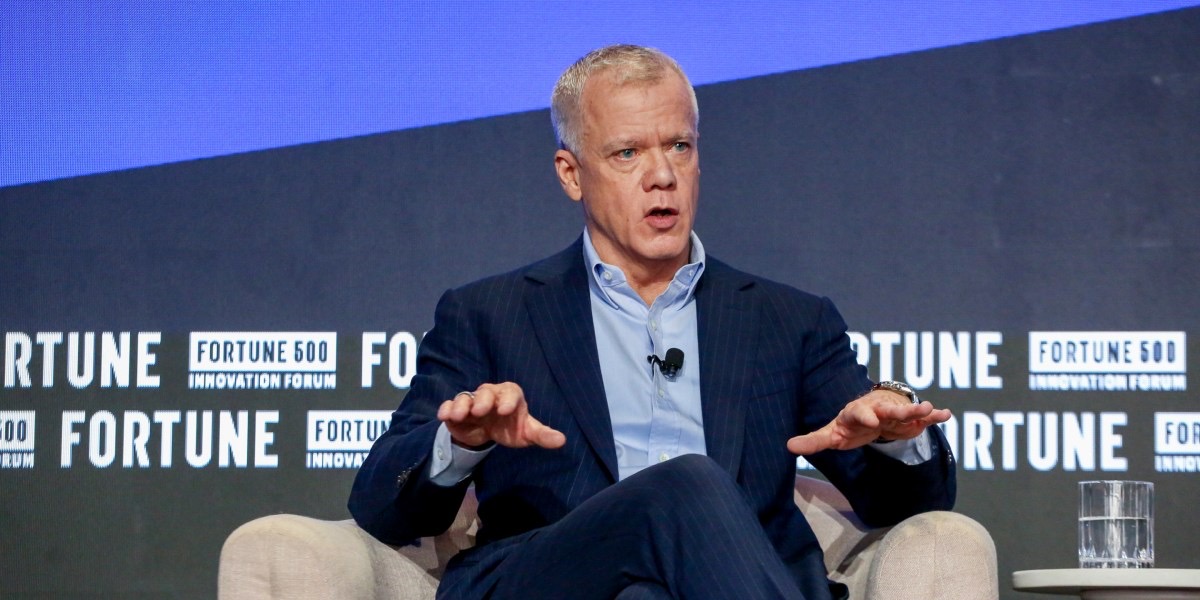
Speaking at the Fortune 500 Innovation Forum in Detroit, Boerner framed the episode as a warning that went beyond one virus. He said 90% of new medicines launch in the U.S., often two to three years before other rich countries get them. 'That's a real benefit that we have, but it's not a birthright,' he said. He named what keeps the country ahead: a public-private partnership built around the NIH, a deep biotech scene, access to capital, drugmakers that work from discovery to sale, and a respected FDA. 'Whenever you undermine any piece of that ecosystem, it impacts the whole,' he said. He did not name Health Secretary Robert F. Kennedy Jr. or any specific policy, but called his personal reaction 'clearly troubling.'
On cost, Boerner went straight at the system around his industry. According to him, medicines account for about 10% to 15% of U.S. health spending, so 'we got to bring the other 85% to the table.' He said roughly 50 cents of every dollar spent on a branded drug goes to someone who had nothing to do with discovering or developing it. 'That screams inefficiency,' he said, borrowing the president's word, 'middlemen.' He also said Bristol Myers runs assistance programs for uninsured and underinsured patients that it is 'prohibited by statute' from offering to people on Medicare. 'That's unacceptable. We should fix that.'
The CDC played down the designation. In a statement, CDC Director Dr. Erica Schwartz said, 'The measles elimination designation is not what protects Americans. Vaccination does,' pointing to $100 million the agency has sent to state and local health departments.
Inside the company, Boerner is rebuilding how drugs get made. Bristol Myers will fold research and development into a single organization under chief medical officer Cristian Massacesi starting Jan. 1, and has committed to cutting the time from a drug entering the clinic to approval by 30%. Boerner credits AI with letting the company run work in parallel that used to happen in sequence.
The market has already voted on the principle at stake. Capital rewards clear rules, and the drugmakers that deliver new therapies depend on a stable framework. PAHO expects the U.S. to submit a plan in the coming weeks to stop measles transmission, and regaining status requires at least a year without an unbroken chain of spread. Free enterprise in medicine works only when the public trusts the science and the taxpayer is not paying for middlemen. Boerner's warning is that both conditions are now under strain, and that a lead built over decades can erode faster than it was earned.



