Alex Hawkinson keeps a collection of Roman artifacts at BrightAI's robot demo center. He has a saying to go with them: 'The Romans are laughing at us.'
His point is simple. The Romans sent technicians out on a schedule to check their roads. Two thousand years later, power companies, water utilities and pipeline operators still do the same. In his telling, two out of three of those trips turn up nothing to fix. The failures that matter tend to happen between visits.
Investors are paying for the idea. BrightAI said it has raised $97 million in a round led by Smith Point Capital, the growth-stage firm started by former Salesforce co-CEO Keith Block. GE Vernova, already a BrightAI customer, also invested, along with Cobalt Capital, Marlinspike Partners, Zero Infinity Partners and existing backers Khosla Ventures, Inspired Capital and Upfront Ventures. The round brings total funding to $184 million and values the company at $750 million, according to a person familiar with the matter. Hawkinson said he 'doesn't care' about unicorn status. What matters, he said, is pulling infrastructure out of the ancient Roman era.
The pitch has three parts. First, replace scheduled human inspections with sensors and AI that watch infrastructure at all times. Second, go after what BrightAI estimates is more than $7 trillion a year in waste worldwide. Third, build a continuous record of how pipes, poles and pumps actually wear out, a kind of data that has rarely existed. If it works, the companies running the world's power and water stop paying for trips that find nothing.
The problem is old. Frontinus, named Rome's water commissioner by the emperor Nerva in the late first century A.D., wrote a treatise on the city's aqueducts. He worried about leaks that were hard to find, people tapping lines without permission, and tree roots damaging masonry.
Hawkinson's view is shaped by a personal failure. In 2011, the power went out at his family's cabin in Leadville, Colorado. Nobody knew until the pipes had frozen, burst and run through the walls. He built a connected sensor hub in his garage, launched it on Kickstarter as SmartThings and sold the company to Samsung in 2014. He has cofounded eight companies and run four as CEO, all of which exited. He bootstrapped BrightAI, founded in 2019, for its first four years.
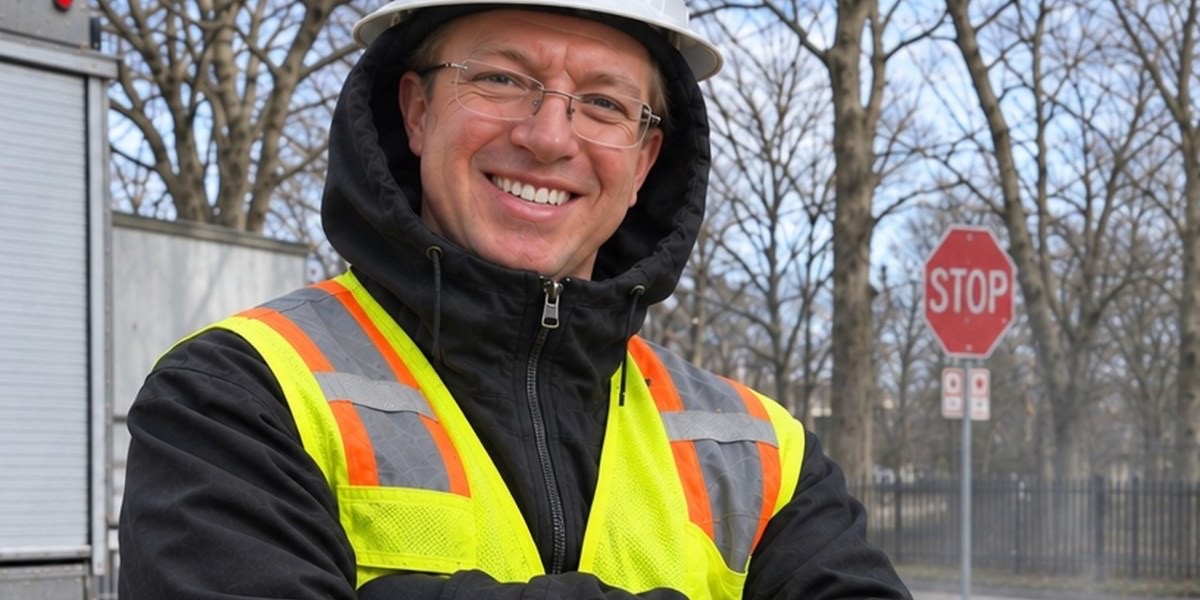
He spent most of his career in software as a service. SmartThings put sensors in homes, not substations or sewers. 'I wasn't from infrastructure,' he said. Out in the field, including one visit in a hard hat inside a sewer, he was shocked by how the systems everyone depends on are monitored and break down. Asked how often frontline technicians are sent out and find nothing, the answer kept coming back at 50% to 70% of the time. BrightAI's release puts it more conservatively, at more than half of scheduled inspections.
The economics are the core of the argument. Send crews less often, and something breaks catastrophically, so operators send them more often. Send them more often, and the labor, which is expensive and often dangerous, becomes unaffordable. Operators settle where, in Hawkinson's words, 'two out of every three times they send somebody out, even the most talented operators, it's unnecessary.' Failures still slip through.
His favorite example is the wooden power pole. By his count the U.S. has about 150 million of them, and each sees a human inspector roughly every eight to 10 years. The 2018 Camp Fire, California's deadliest wildfire, killed 85 people after a worn hook on an aging PG&E transmission tower gave way. Cal Fire determined the utility's lines caused the blaze. Hawkinson's point is that the hook was 'completely invisible' until it failed.
The $7 trillion figure is BrightAI's own. The company says it surveyed 12,158 operators across 16 industries and puts the addressable annual impact above $7.5 trillion. It also found that 98% of those operators lack adequate visibility into their assets. The outside research the release cites, from the Energy Department, the EPA, Swiss Re and the National Safety Council, puts the cost of infrastructure failure alone at $2.5 trillion a year.
The market has already voted. Capital is pricing a simple idea: paying crews to drive out and find nothing is pure cost, and cheaper sensing beats a calendar. For utilities and water operators, that means fewer wasted trips and fewer surprises. For the taxpayer and the ratepayer, it means someone other than a regulator's schedule decides when a pole gets checked. Free enterprise is solving a problem that centuries of fixed inspection cycles never could.



