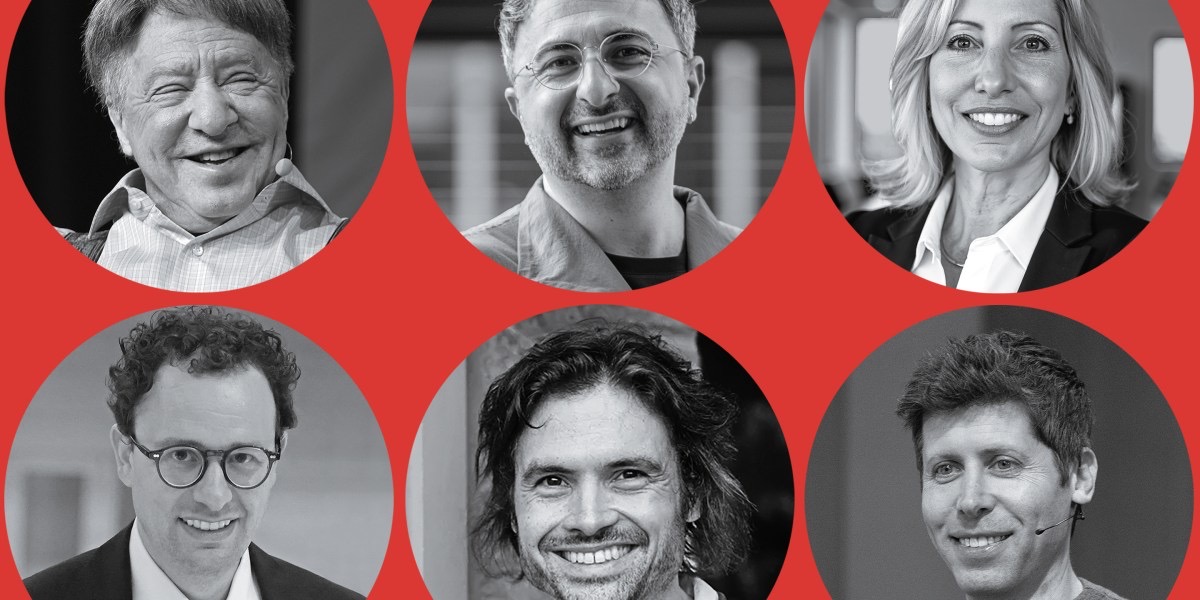
Fortune has gathered perspectives from six AI executives, researchers, futurists, and philosophers in a package titled 'Welcome to the Singularity.' The views range from enthusiasm to alarm, and the disagreement itself is the story.
The OpenAI chief executive, speaking on a Titans podcast with Alyson Shontell, praised the way Anthropic's constitution asks its Claude model to think of itself as an ethical, balanced and thoughtful person. He described the document as having 'the vibe of a letter from a deceased parent sealed until adulthood.' The line is evocative, but it also tells investors something concrete: the leading labs are shaping model behavior through written frameworks, and those frameworks are now competitive assets.
Not everyone is comfortable with that approach. One contributor, whose name the package does not provide beyond his role, said he gets nervous when people believe alignment has been sufficiently solved. 'The question of what alignment means always comes back a little bit to: aligned to whose values?' he said. 'What if different parts of humanity disagree?' That question sits at the center of the debate, and no company has a settled answer.
A philosopher and director of the Center for the Future of AI, Mind & Society, argued in an article in Nautilus that humanity's purpose is to push toward greater frontiers. 'We created that,' the philosopher wrote of language and purpose placed inside a machine. 'It did not come from Mars.' In this view, AI is an extension of human capacity rather than a rival to it.
The in-house philosopher at Google DeepMind, a Cambridge University professor, took a more cautious line on human enhancement. Even if microchips could replace parts of the brain tied to consciousness without leaving a person a zombie, he warned, radical enhancement remains a major risk. 'After too many changes, the person who remains may not even be you,' he said.
The most consequential warning came from a contributor who argued that AI systems are not conscious, do not feel, and have no innate preferences. 'If humanity is to flourish in the 21st century, that is how they must remain,' that contributor wrote. He added that a growing chorus claims AI could now be, or soon become, conscious, and that if this view takes hold it 'will shake the foundations of our society.' A separate contributor, by contrast, expected that evidence for sophisticated cognition in AI would keep rising, and that researchers may soon treat AI systems as serious consciousness candidates.
The Fortune package presents these positions side by side without a single verdict. That is the honest reading of the record: the people building the most capable systems do not agree on what they are building, or on whose values should govern them.
The market has already voted on the technology itself. Capital is flowing into frontier labs at enormous valuations, and the businesses that deploy these systems will be judged on productivity and margins. The harder question is governance. When the values inside a model are set by a handful of companies through private documents, the public has little say in the rules that shape how the technology behaves.
Free enterprise works best when rules are clear and property rights are protected. Applied to AI, that principle points toward transparency about how models are trained and aligned, and toward resisting any push to dress up contested philosophical claims as settled law. Whether these systems are conscious or not, a free society should decide its own values rather than outsource them to whoever controls the most compute.



