The internet was built on a simple bet: a person is looking at the screen. UBS now argues that AI agents are breaking that bargain, and that financial markets have not yet priced how fast.
Ulrike Hoffmann-Burchardi, chief investment officer for the Americas at UBS Wealth Management, said in a note and podcast released Monday that 'since its inception, the internet has been built for human eyeballs.' Every checkout button and software dashboard, she said, assumes a person is clicking through tabs. Agents that shop, compare and buy on someone's behalf undermine two of tech's most profitable models: digital advertising and enterprise software sold as a service. She summed up the shift as 'B2C (business to consumer) to B2A (business to agent),' and warned investors that 'the speed of AI disruption is still underappreciated by the markets.'
Her example is ordinary. A shopper asks an agent for waterproof trail-running shoes under $150 that arrive by Thursday, and the agent checks inventory, compares specs and completes the purchase. 'AI agents do not have emotions,' she said. 'They don't care about a clever Super Bowl spot or a brightly colored retargeting banner.' Brands that want to be found will need to expose machine-readable product data and real-time inventory, because search-engine optimization alone is no longer enough.
The same logic reaches enterprise software. If one AI-augmented employee or automated workflow can work at the speed of five to 10 people, companies stop buying additional seats, and if agents query a database directly, the dashboard becomes obsolete.
Consumer adoption is already visible. Meta's Muse agent app passed an estimated 10 million U.S. downloads in its first 40 days, according to Sensor Tower estimates reported in October. UBS also cited Instinct, a personal-agent app, where 40% of users connected their credit cards to its assistant by week three.
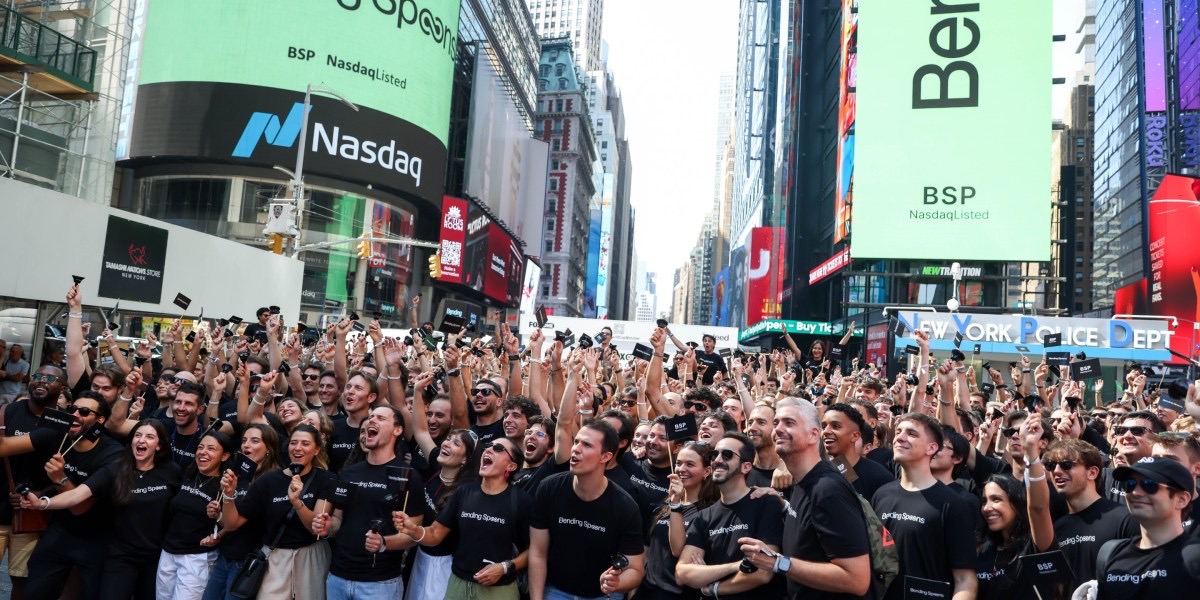
Bending Spoons is a near-pure test of the thesis. The Milan-based company has bought more than 50 businesses, including AOL, Vimeo, Eventbrite, Evernote and WeTransfer. Its model, as BofA describes it, is to buy durable but under-optimized subscription businesses, cut costs, raise prices and reinvest the cash in more acquisitions.
BofA analysts Omar Dessouky and Ethan Liu built their November 16 report around one line: 'Inconvenience is the main moat against AI.' People keep paying because finding a forgotten subscription, researching alternatives or moving years of notes is a chore, and an agent does chores. Their conclusion is that subscribers who get no value 'have switching costs that are limited to the effort required to identify and cancel the unused subscription.' Experts they consulted estimated that '10% to 40% of payers may not use the products they pay for.'
BofA rates about 29% of Bending Spoons' projected 2027 revenue as high risk. AOL, with a $778.8 million 2027 estimate, is the largest exposure, since AI can compare its bundled security add-ons and replace its tech-help subscriptions. Eventbrite ($403.1 million) and Evernote ($125.5 million, where 'AI assistants become a new second brain') also carry high risk. WeTransfer is medium risk and Vimeo low. BofA has not rated the remaining 53%.
Bending Spoons says it has seen no such effect. 'We closely monitor our businesses' KPIs and haven't seen any signs that AI agents are driving cancellations or switching to alternative products,' a company spokesperson told Fortune. BofA largely agrees on the data, saying it 'ha[s] not yet seen data to suggest that is currently happening at large scale.' Its preliminary view is that 'the value gained from switching to cheaper or better solutions rarely exceeds the cost of staying put.' Savings from cancelling these services run about $228 to $728 a year, which the analysts compared to a weekly cup of coffee.
BofA rates the stock Underperform with a $38 price target against a $41.08 share price, citing valuation and whether Bending Spoons can keep buying companies at its target returns. Net debt stood at 205% of equity at the end of 2025, by BofA's count, and recent deals include Airtable for $1.285 billion and Miro for $1.355 billion.
The market has already voted on the old playbook in part. Capital rewards businesses whose customers stay because leaving is hard, and this model depends on that friction. If AI agents make switching cheap, the free-enterprise logic of high margins from captive subscribers gets tested directly. Investors should watch churn data, not press releases, to see whether the moat is holding.



