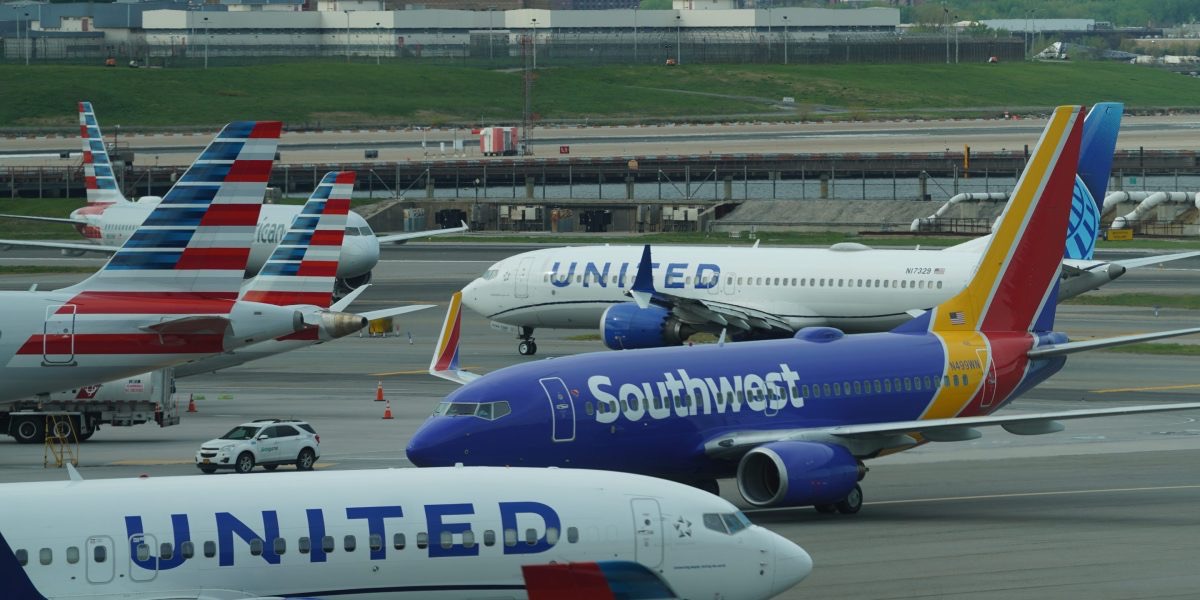
A single week of outages tested the technology that most companies take for granted. It began on Thursday when a Microsoft outage disrupted workplace services including Outlook, Teams and Copilot. One day later, the Federal Aviation Administration issued a ground stop that halted departures across the nation, upending travel plans for more than 1.5 million passengers. More disruptions followed: an outage affected banking websites and apps run by Wells Fargo and Capital One, then United Airlines and Apple were hit, and an internal communications network at the National Security Agency went down.
There is no evidence that these failures are connected. But the attention they drew has put a spotlight on the reliability of enterprise IT, on how companies communicate an outage to employees, customers and boards, and on how they assess what their business continuity plans missed.
'Our approach is that resilience doesn't really come from a document or a backup system,' says Jordan Ruch, chief information and digital officer at New Jersey-based health system AtlantiCare. 'It is a muscle organizations build and it comes from planning with operations before something happens.' Ruch ranks his systems by criticality. Clinical systems and core infrastructure have up to three areas of redundancy, and at least two backups. Microsoft's tools were not deemed that critical, and when they failed, they slowed the health system's ability to keep up with demand. Because staff have leaned more heavily on Copilot, AtlantiCare is now looking at adding redundancy for those applications.
At the law firm Ropes & Gray, layers of redundancy paid off. Marsha Stein, its chief information officer, said an emergency notification system kept employees informed when Teams faltered, and a secondary email system kicked in when Outlook went down. 'You can't just say to a client, Sorry, we don't have any email, we can't help you, as it turned out, for 18 hours,' Stein said. By Tuesday morning she was briefing the firm's governing managing committee on what went wrong and what could have gone better. 'Nothing's ever perfect,' she said, adding that leaders need to think outside the box about the next system that could fail.
Shreyas Mysore, chief information officer at Lockton, pointed to a different gap: Microsoft was slow to warn clients that the outage could have global implications. 'I think that is one thing that Microsoft could have done better, giving us a heads-up of saying, Look, there's some critical infrastructure that's starting to fail,' Mysore said. His team will produce an incident report covering the severity of the outage and how executives were engaged. 'I hold my vendors accountable for reliability, I hold myself accountable for resilience,' he said.
The pattern is clear. Companies that paid for redundancy in advance recovered faster, and those that relied on a single vendor learned the cost of that dependence in real time. Vendors that communicate poorly lose the trust of the customers who pay them.
The market has already voted on this. Redundancy is not free, but a 1.5 million-passenger ground stop, an 18-hour email blackout at a law firm and a stranded health system workforce all carry costs that someone ultimately absorbs. Capital rewards firms that budget for failure, and it punishes those that treat resilience as a line item to cut. Private enterprise, not a federal bureaucracy, is best placed to decide how much backup is worth buying.



